Low-dust renovation: capture the dust at the machine – with an M or H class dust extractor

Sheeting and closed doors keep the dust out of neighbouring rooms. In the work area, only capture at the source helps: a machine with extraction plus a dust extractor of at least class M – Galeski has both, plus class H and a pre-separator.

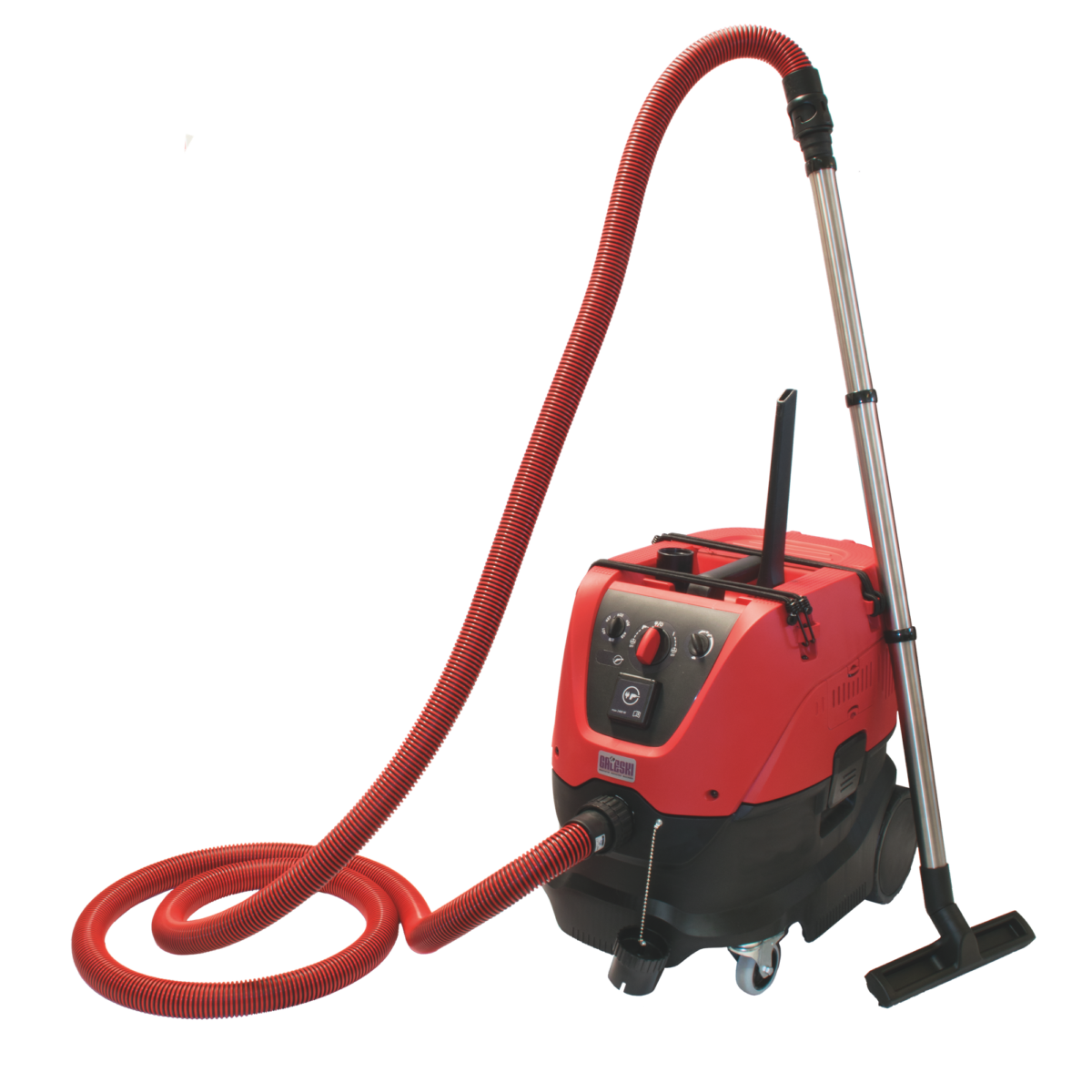
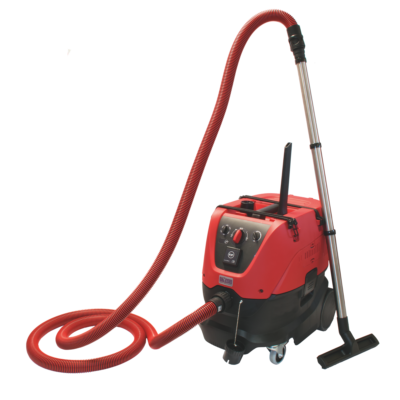
Dustcleaner 300 · Generation 2 · Wet/Dry

Dust class
M
Air flow max.
4,500 l/min
Vacuum max.
250 mbar

799,00 €

View in shop
Dustcleaner 300

What matters here

  • Sealing off alone is not enough

    Dust walls and closed doors keep dust out of neighbouring rooms, but not out of the air in the work area. There, what counts is how much dust the machine never releases in the first place.

  • The wrong vacuum blows fine dust back out

    Whatever passes the filter ends up back in the room. Dust classes limit the penetration: below 0.1 % for class M, below 0.005 % for class H1. For hand-held grinders and plaster milling machines, at least dust class M is required as far as technically possible2.

  • Without an extraction hood, dust is released freely

    Without an extraction hood, the removed material is thrown into the room before any vacuum can reach it. Dust is only captured when hood and hose sit right at the tool.

Step by step

  1. Choose the extractor to suit the dust

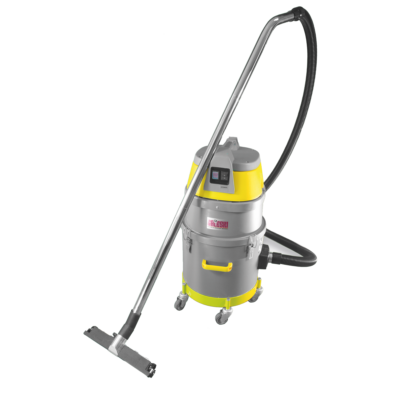
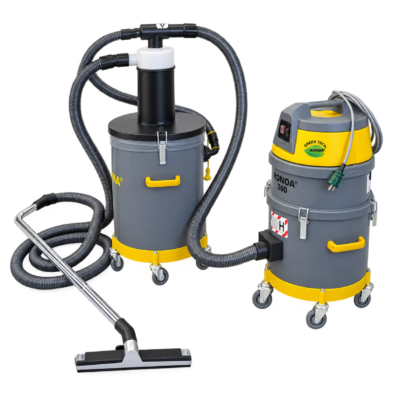
    Dustcleaner 300: dust class M, up to 4,500 l/min air flow, automatic filter cleaning, also wet vacuuming. Dustcleaner 200: dust class H with downstream HEPA filter for fine and hazardous dusts, warning signal if the air flow is too low.

    Note: Both have an automatic power tool socket: the vacuum starts and stops together with the connected machine.

  2. Machines with extraction at the emission source

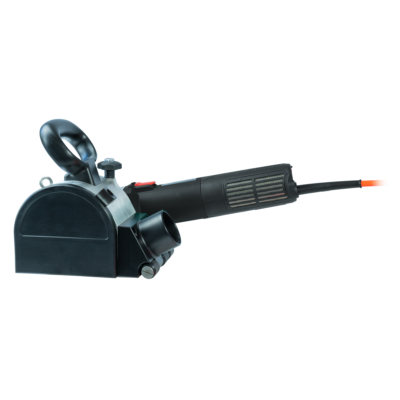
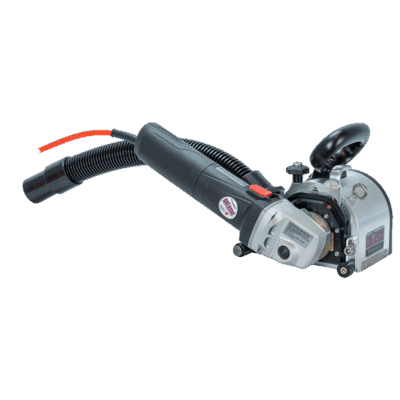
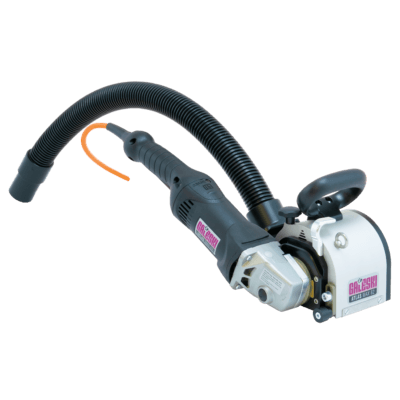
    On the ATLAS drum milling machines the milling drum throws the removed material straight towards the extraction; the guard with extraction hose and vacuum cleaner connector is included.

  3. Cuts with a built-in vacuum

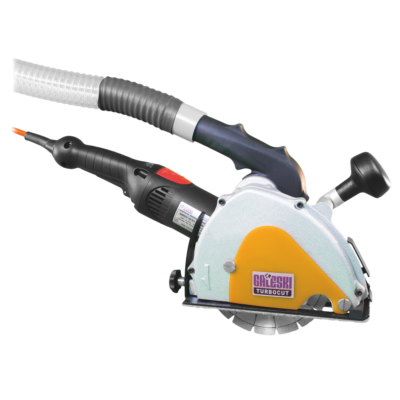
    If natural or engineered stone has to be cut in an existing building, the Turbocut 160 DCS has the extraction fan on board: belt-driven, connect the filter bag, up to 40 mm cutting depth – low-dust without an additional vacuum.

  4. Pre-separate large amounts

    Milling large areas produces a lot of fine dust. The Cyclone 501 pre-separator uses the cyclone effect to separate 98–99 % of the material before it reaches the vacuum, holds 50 litres and considerably extends the service life of the vacuum filter – for example upstream of the Dustcleaner 200.

  5. Vacuum the surface

    For the final clean-up, the Dustcleaner 300 comes with a 4 m hose, hand tube, two extension tubes and floor nozzle.

Dustcleaner 300 or 200?

Both extract right at the machine when cutting, grinding and milling, and start with it. The difference lies in dust class and filter.

Dustcleaner 300Generation 2 · Wet/DryDustcleaner 200Dry
Dust classMH
Air flow max.4,500 l/min3,240 l/min
Vacuum max.250 mbar250 mbar
Power1,200 W1,100 W
Weight22 kg21 kg
Best forDust class M with automatic filter cleaning – for hazardous dusts on site and in the workshop, also wet.Dust class H with HEPA filter – for fine and hazardous dusts, with self-cleaning channel filter.
Price

799,00 €

View in shop

1.199,00 €

View in shop

Dustcleaner 300Generation 2 · Wet/Dry

Best for: Dust class M with automatic filter cleaning – for hazardous dusts on site and in the workshop, also wet.

Dust class
M
Air flow max.
4,500 l/min
Vacuum max.
250 mbar
Power
1,200 W
Weight
22 kg

799,00 €

Best for: Dust class H with HEPA filter – for fine and hazardous dusts, with self-cleaning channel filter.

Dust class
H
Air flow max.
3,240 l/min
Vacuum max.
250 mbar
Power
1,100 W
Weight
21 kg

1.199,00 €

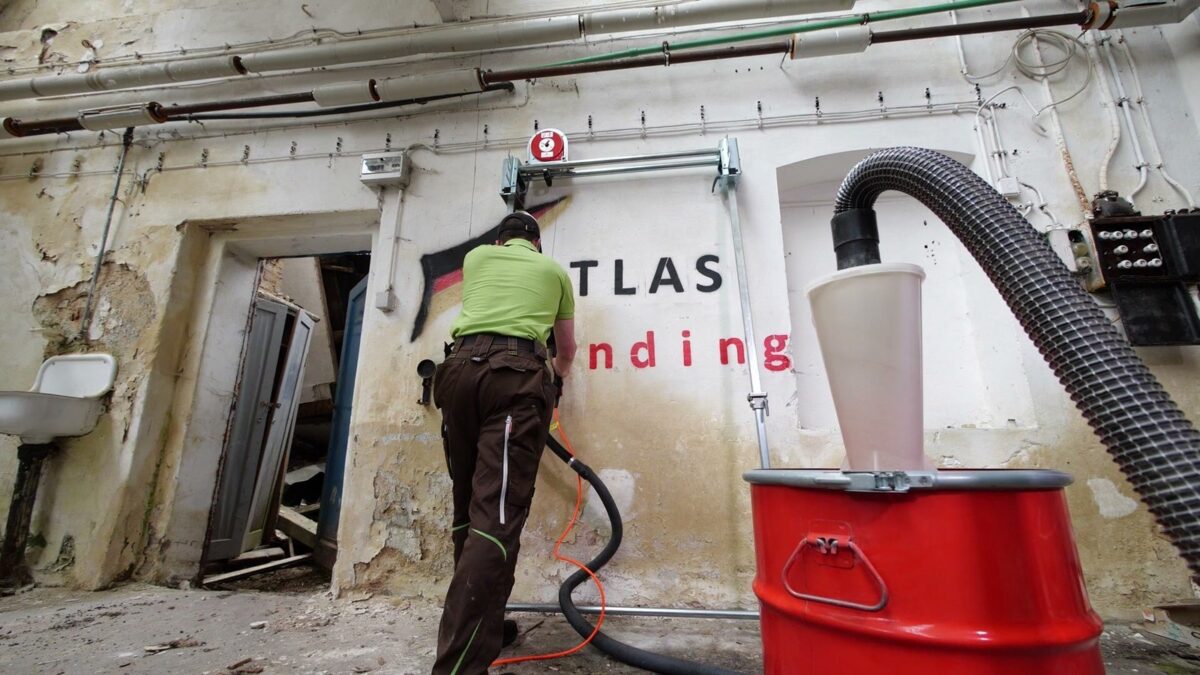
Renovating an old building: operator milling the wall, cyclone pre-separator on a red drum before the vacuum

Old building: milling with a pre-separator before the vacuum

The ATLAS hangs on a balancer at the wall; the milled material runs through the hose into the cyclone pre-separator on the collecting drum and only then to the vacuum. Still from the Galeski Manufaktur video.

Low-dust milling: complete

Compact drum milling machine, dust class H extractor and pre-separator for large amounts of fine dust.

Together from3.810,00 €plus shipping

Frequently asked questions

Dust class M or H – which do I need?

For hand-held grinders and plaster milling machines, TRGS 500 requires dust extractors of at least class M as far as technically possible2. Class H has the lower permitted penetration (below 0.005 % instead of below 0.1 %)1. Galeski offers both: Dustcleaner 300 (M) and Dustcleaner 200 (H with HEPA filter).

Is an ordinary vacuum cleaner enough?

Not for extraction on hand-held machines: a dust extractor of at least class M is required2. The ATLAS safety information also calls for a suitable vacuum cleaner with a matching filter.

Does the vacuum start automatically with the machine?

Yes. The Dustcleaner 300 and Dustcleaner 200 have an automatic power tool socket: the vacuum starts and stops together with the connected machine.

What is a pre-separator for?

The Cyclone 501 holds back 98–99 % of the material before the vacuum, holds 50 litres and protects the vacuum filter. It fits upstream of vacuums with a 38 or 50 mm connection and takes wet, dry and mixed material.

Can I avoid dust by working wet?

Not with the ATLAS: the drum milling machines and their milling drums are intended for dry use only. They become low-dust through extraction right at the drum.

What comes with the Dustcleaner 300?

4 m hose Ø 38 mm, hand tube, two extension tubes, floor nozzle, collection bag, two tool adapters for connecting to the machine and a double-walled fleece filter bag.

Cookie Consent with Real Cookie Banner