Polishing tile edges: straight, square visible edges on porcelain, guided by the edge polisher

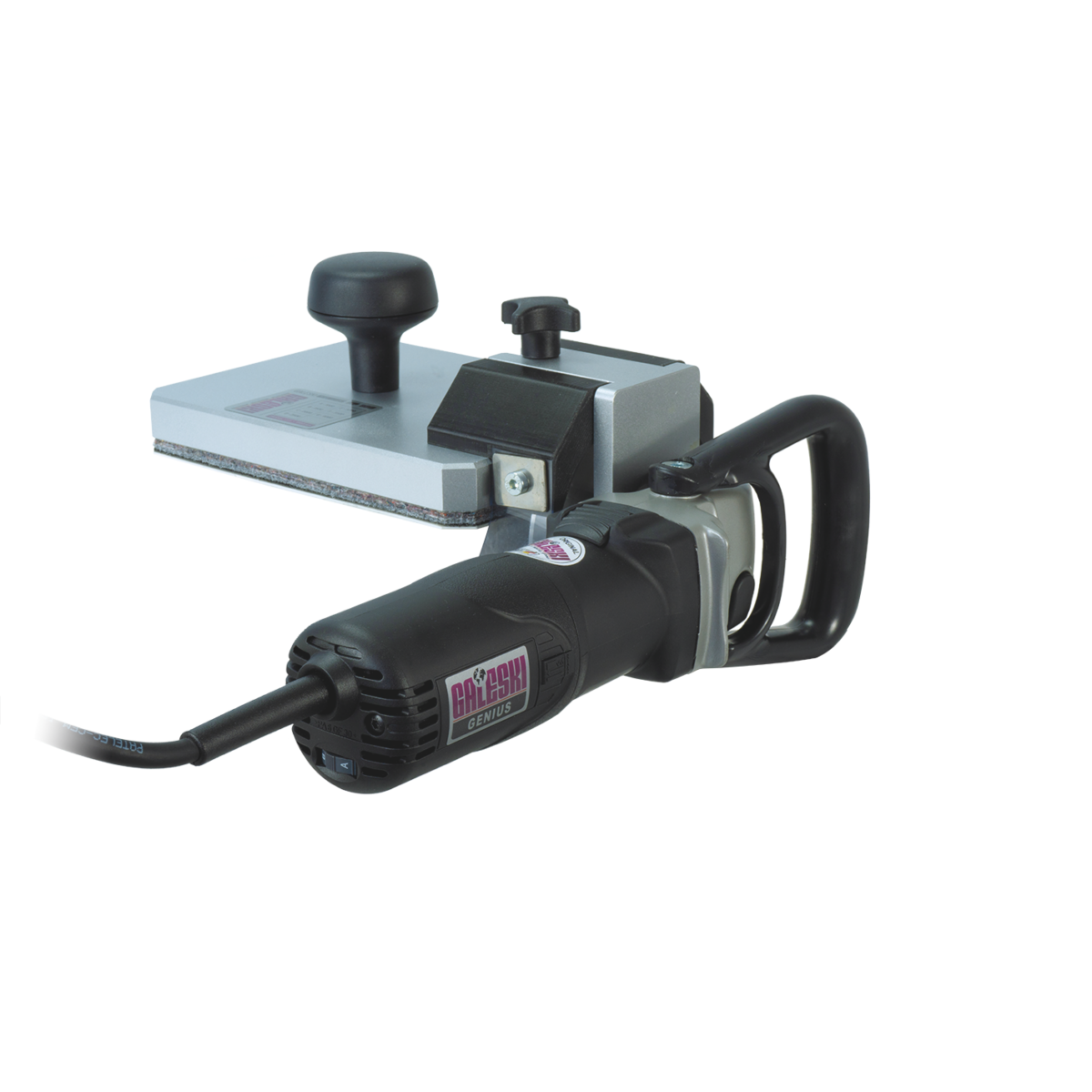
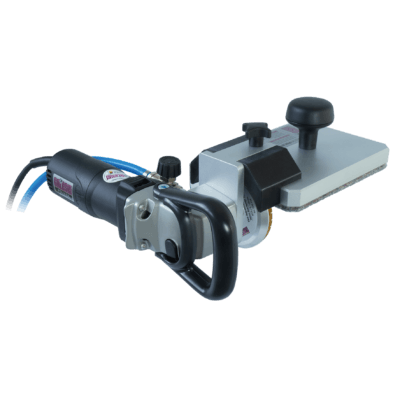
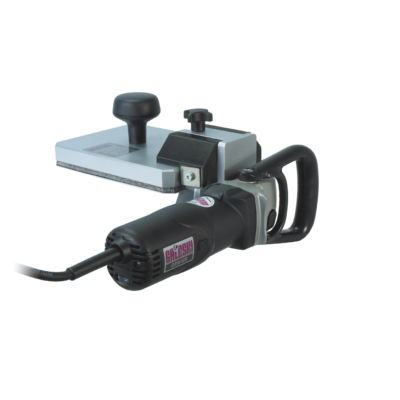
Where a cut tile remains as a visible edge – at an outside corner, niche, step or window sill – the cut edge has to hold its own next to the factory edge. An edge polisher guides the pad on a base plate square to the edge: dry with the Genius KP, wet with the Polifox KP.

Genius KP · Dry

Slab thickness max.
30 mm (KP80) / 50 mm (KP100)
Speed
1,000–4,000 rpm
Weight
4.3 kg

From: 664,00 €

View in shop
Genius KP

What matters here

  • Angle grinder with pad, freehand

    Without guidance the machine tilts slightly with every movement – the edge becomes rounded, wavy or gets an uneven chamfer. Next to a rectified factory edge, every deviation shows.

  • Rubbing stone and hand pad

    By hand an edge can be arrised, but hardly brought to an even, square polish over its whole length – especially on the long edges of large-format slabs.

  • Trim or visible edge

    Outside corners often get a trim profile. If you want to work without one, you need a cut edge that holds its own next to the factory edge.

Step by step

  1. Make a clean cut

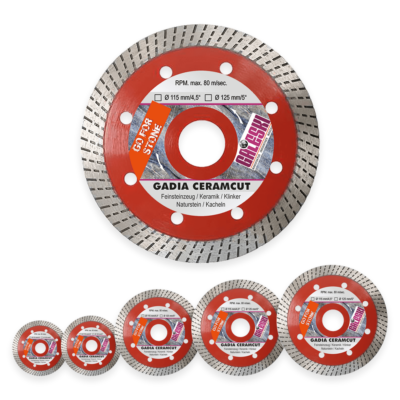
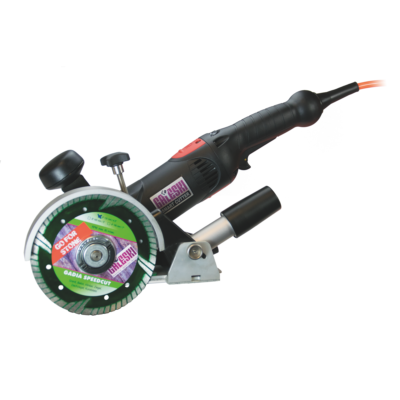
    GADIA Ceram-Cut delivers the highest cut quality in porcelain stoneware, ceramics and patio slabs; make the straight cut with the SMART CUTTER along the guide edge or on the rail system.

  2. Decide: dry or wet

    The Genius KP polishes dry (1,000–4,000 rpm, 4.3 kg) – without a water supply. The Polifox KP polishes wet (800–3,600 rpm, 5.2 kg) with water hose and splash guard; it works with a PRCD safety switch at any socket or with a CEE plug on the isolating transformer TT 2602. Both: 890 W, 7 speed settings A–G.

  3. Prepare base plate and holder

    KP80 with Ø 80 mm aluminium holder for slab thicknesses up to 30 mm, KP100 with Ø 100 mm up to 50 mm. The felt on the base plate is meant for smooth, delicate surfaces; for rough ones, fit the velcro plastic plate.

  4. Polish through the grits

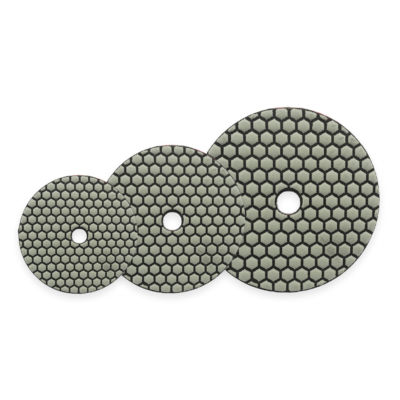
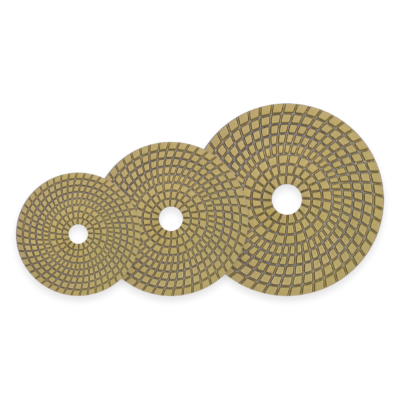
    One hand guides the base plate by the knob and presses it lightly against the support, the other moves the machine back and forth by the D-handle with light pressure against the edge. Change pads from coarse to fine: loosen the star knob of the flat guide, pull the machine out, swap the pad on the velcro holder. Dry with GADIA Easy Dry, wet with GADIA Resin Premium.

    Note: Too much pressure harms the machine and pads and can cause burns (brown marks) on tool and stone. On the Polifox KP always open the water before switching on (operating instructions).

Genius KP or Polifox KP?

Both polish straight, square 90° edges on porcelain stoneware, ceramics and natural stone, also on thin slabs – the difference is dry or wet.

Genius KPDryPolifox KPWet
Operating conditionDryWet
Speed1,000–4,000 rpm800–3,600 rpm
Tool Ø max.80 mm (KP80) / 100 mm (KP100)80 mm (KP80) / 100 mm (KP100)
Slab thickness max.30 mm (KP80) / 50 mm (KP100)30 mm (KP80) / 50 mm (KP100)
Weight4.3 kg5.2 kg
Best forDry, without a water supply – with GADIA Easy Dry.Wet with water feed – with splash guard, PRCD or CEE, with GADIA Resin Premium.
Price

From: 664,00 €

View in shop

From: 819,00 €

View in shop

Best for: Dry, without a water supply – with GADIA Easy Dry.

Operating condition
Dry
Speed
1,000–4,000 rpm
Tool Ø max.
80 mm (KP80) / 100 mm (KP100)
Slab thickness max.
30 mm (KP80) / 50 mm (KP100)
Weight
4.3 kg

From: 664,00 €

Best for: Wet with water feed – with splash guard, PRCD or CEE, with GADIA Resin Premium.

Operating condition
Wet
Speed
800–3,600 rpm
Tool Ø max.
80 mm (KP80) / 100 mm (KP100)
Slab thickness max.
30 mm (KP80) / 50 mm (KP100)
Weight
5.2 kg

From: 819,00 €

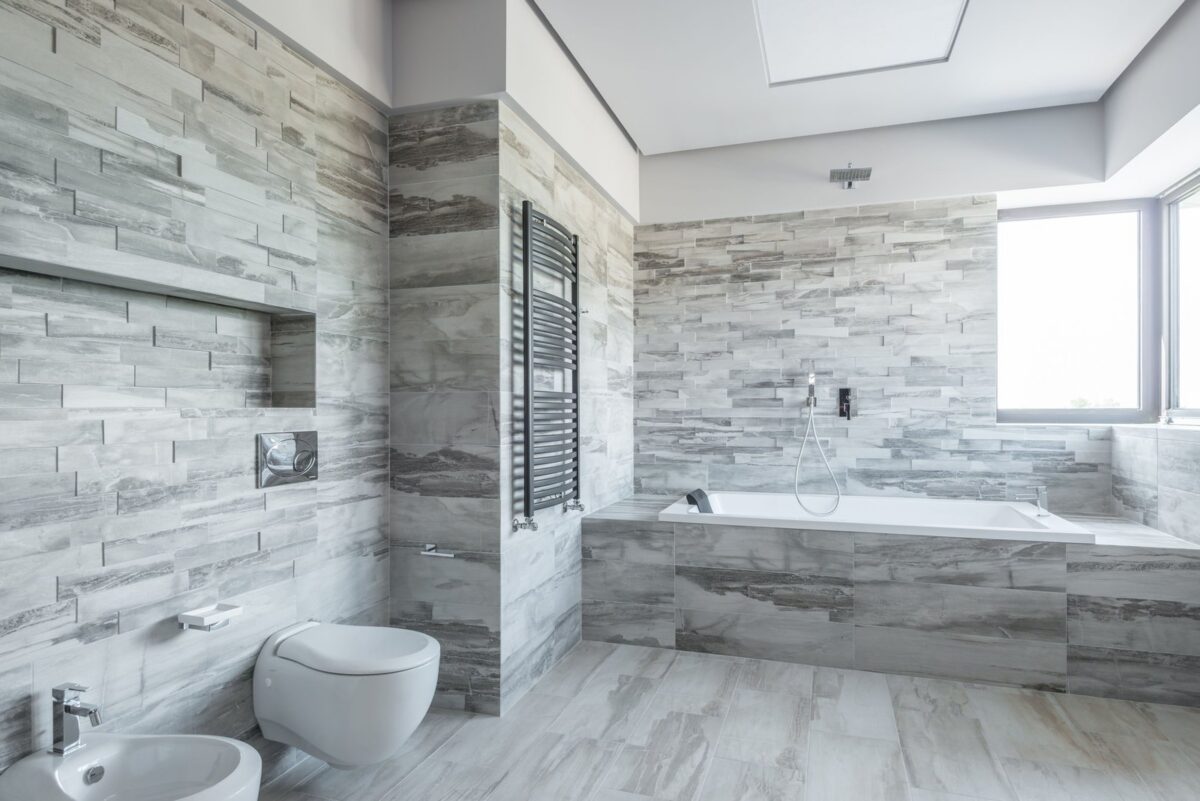
Bathroom with large-format tiles, a niche and a tiled bathtub

The edge everyone sees

Niches, ledges and outside corners in the bathroom show the tile edge – with a trim profile or as a polished visible edge.

Set-up for dry edge polishing

Genius KP with Ø 80 or 100 mm aluminium holder and GADIA Easy Dry pads in the same size, one pad per grit step. For wet work, the Polifox KP with GADIA Resin Premium.

Together from681,00 €plus shipping

Frequently asked questions

Can you polish porcelain tile edges?

Yes. According to their intended use, the Polifox KP and Genius KP are built for straight, square 90° edges in mineral materials, explicitly including porcelain stoneware and ceramics – alongside marble, granite, engineered stone, glass and sandstone.

Polish dry or wet?

Dry with the Genius KP where no water should get into the room; wet with the Polifox KP, which must never run without water feed and needs a PRCD safety switch or an isolating transformer.

KP80 or KP100?

With Ø 80 mm tools (KP80) you work slabs up to 30 mm thick, with Ø 100 mm (KP100) up to 50 mm.

Which pads fit?

For the Genius KP the dry GADIA Easy Dry in Ø 80 or 100 mm, for the Polifox KP the GADIA Resin Premium for wet grinding in Ø 80 or 100 mm – each with velcro on the holder.

Can I grind mitres, chamfers or rounded edges with it?

The KP edge polishers are designed for straight, square 90° edges and not for cutting. Mitres, chamfers and rounded profiles are not part of the described application.

Does a polished edge pick up dirt more easily?

It can: polishing opens up the pores of porcelain stoneware, “which can lead to increased dirt adhesion”1. Check the tile manufacturer’s care and sealing instructions.

Cookie Consent with Real Cookie Banner